A kitchen fire, a burst pipe in January, smoke damage from the unit next door — however it happened, you’ve just learned you can’t live in your home for a while. The first few days are a blur of phone calls, and one question sits under all of them: where are we going to stay? This guide walks through what to do, step by step, and how your homeowners or renters insurance can help pay for temporary housing in Chicago.
This is general information, not legal or insurance advice. Your policy and your adjuster have the final word.
Step 1: Get somewhere safe tonight
For the first night or two, a hotel or family member’s couch is fine. If the fire department responded, ask whether the Red Cross can help with immediate needs. Don’t sign a long lease or commit to anything big yet — you’ll make better decisions once you’ve spoken with your insurance company.
Step 2: Call your insurance company and ask about ALE
Most homeowners policies — and most renters policies too — include Additional Living Expense (ALE) coverage, sometimes called “Loss of Use” or Coverage D. It helps pay the extra costs of living somewhere else while your home is repaired after a covered loss. We explain the basics on our ALE insurance and displaced housing page.
When you call, ask:
- Is my loss covered, and does my policy include ALE?
- What is my ALE limit — both the dollar amount and the time limit?
- Can I get an advance for immediate expenses like clothing and lodging?
- What kind of temporary housing is approved, and how will it be paid — reimbursement or paid directly?
- Who is my adjuster, and how do I send them receipts?
Ask for the answers in writing (an email is fine). It will save you confusion later.
Step 3: Understand what ALE does — and doesn’t — cover
ALE pays costs above your normal living expenses. According to the Illinois Department of Insurance, that typically means things like temporary lodging, extra restaurant meals, and laundry service while your home is being repaired. It does not pay your mortgage or bills you’d have anyway.
A simple example: if your grocery bill is normally $800 a month but you’re spending $1,200 because you have no kitchen, ALE may cover the $400 difference. That’s one reason a furnished apartment with a full kitchen can stretch your ALE further than months of hotel rooms and takeout.
Two other things to know:
- Limits are real. ALE usually has a dollar cap (often a percentage of your dwelling coverage) and a time limit. Plan your housing so you don’t run out before repairs finish.
- Flooding is different. Standard homeowners policies generally exclude flood damage; that’s covered by separate flood insurance. A burst pipe is usually treated differently from a flood — ask your adjuster.
Step 4: Estimate how long you’ll be out
Smoke and water damage often take longer to repair than people expect — drying, testing, permits, and contractor schedules all add up. Ask your adjuster or contractor for a realistic timeline. If the answer is more than a few weeks, it’s time to move from a hotel to something more livable.
Step 5: Choose housing that fits a longer stay
Hotels work for a few nights. For a month or more, most families are better off in a furnished apartment:
- Room for everyone: separate bedrooms instead of two queen beds in one room
- A real kitchen: cook normally, keep routines, and keep food costs closer to normal
- Laundry: in-unit washer and dryer instead of laundromats or hotel laundry fees
- A sense of normal: a living room, a table to eat at, a place for kids to do homework
- Close to life: stay near work, school, or family instead of wherever a hotel has rooms
Step 6: Keep every receipt
Insurers reimburse based on documentation. Keep receipts for lodging, meals, laundry, mileage, and anything else you’re spending because you’re out of your home. A shared folder on your phone works well. If you received an advance, the Illinois Department of Insurance notes those amounts will be deducted from your final ALE settlement — so track everything.
Step 7: Plan for extensions
Repairs slip. If your contractor’s timeline changes, tell your adjuster right away and confirm your housing can be extended. Moving twice during a displacement is stressful and expensive — choose housing that’s flexible from the start.
How Ryan Corporate Housing helps displaced families
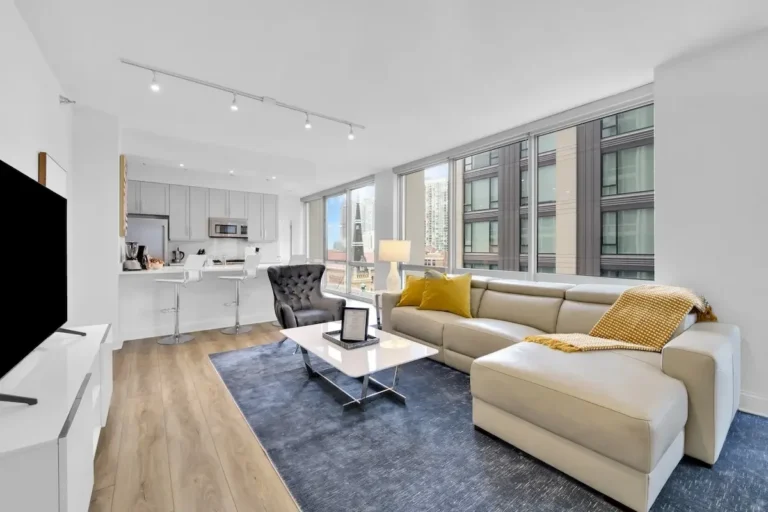
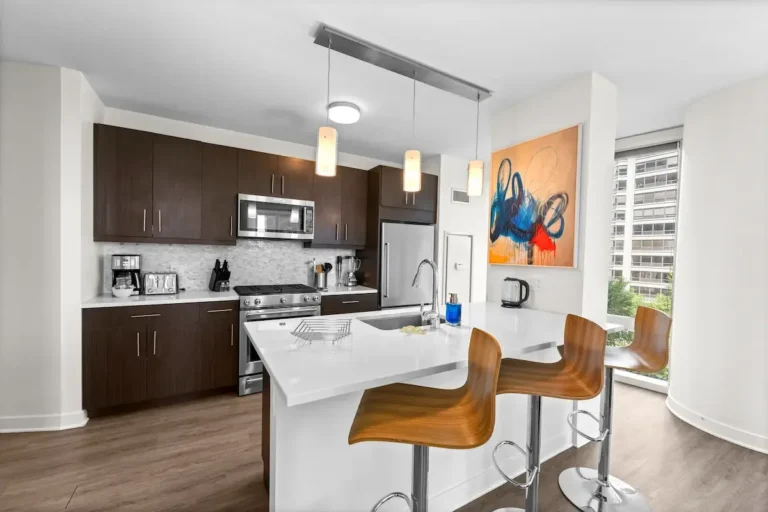
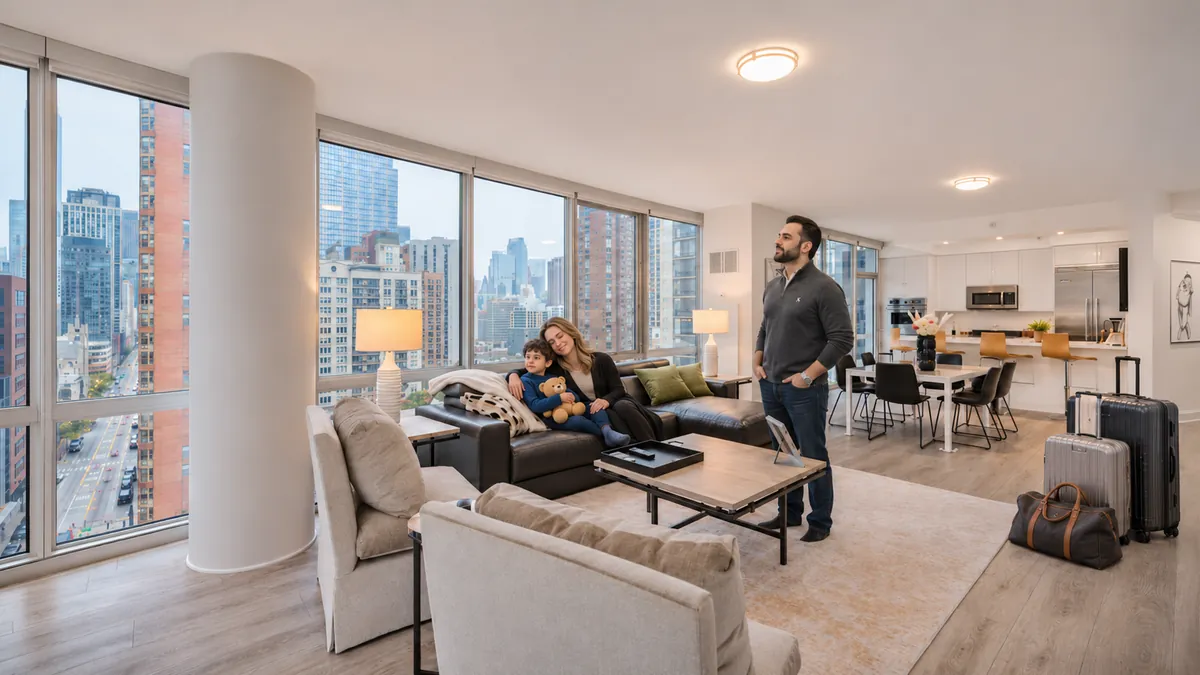
We provide fully furnished apartments in downtown Chicago for families and individuals displaced by fire, water damage, and other covered losses. Our furnished apartments include a fully equipped kitchen, linens, Wi-Fi and utilities, so you can move in with a suitcase and start living normally again. Larger layouts — like the two- and three-bedroom apartments at Two West Delaware in the Gold Coast and Atwater Apartments in Streeterville — give families the space a hotel can’t.
Our stays are 30 days or longer, which lines up well with most repair timelines, and we work with policyholders, adjusters, and public adjusters to keep extensions simple when repairs run long. We can also bill your insurance company directly, so your family isn’t paying rent up front and waiting for reimbursement.
Many insurance companies arrange temporary housing through a housing placement company. We regularly work with displacement companies including CRS Temporary Housing, Primus Temporary Housing, and ALE Solutions — so if your insurer has assigned one, you can ask them about placing your family in one of our apartments.
Frequently asked questions
Does renters insurance include temporary housing?
Many renters policies include ALE (Loss of Use) coverage. Check your policy or call your insurer to confirm your limits.
Will my insurance pay for a furnished apartment?
If your policy includes ALE and your loss is covered, a furnished apartment is usually an eligible housing expense, subject to your policy limits. Confirm with your adjuster before you book. Ryan Corporate Housing can bill your insurance company directly.
My insurance company assigned a housing company. Can I still stay with you?
Often, yes. Insurers frequently use placement companies such as CRS Temporary Housing, Primus Temporary Housing, and ALE Solutions, and we work with all three. Ask your placement coordinator about Ryan Corporate Housing, or contact us and we’ll help coordinate.
How long can I stay?
That depends on your policy’s ALE limits and your repair timeline. Our apartments require a minimum stay of 30 days, and stays can be extended as repairs continue.
Who can I call if I have a problem with my claim?
Illinois residents can contact the Illinois Department of Insurance for help with insurance questions or complaints. If you hire a public adjuster, Illinois requires them to be licensed by the Department.
Need a place to stay while your home is repaired?
We’ll help you find a furnished apartment that fits your family, your timeline, and your coverage. Check availability or contact our team — we’re happy to talk with you or your adjuster.