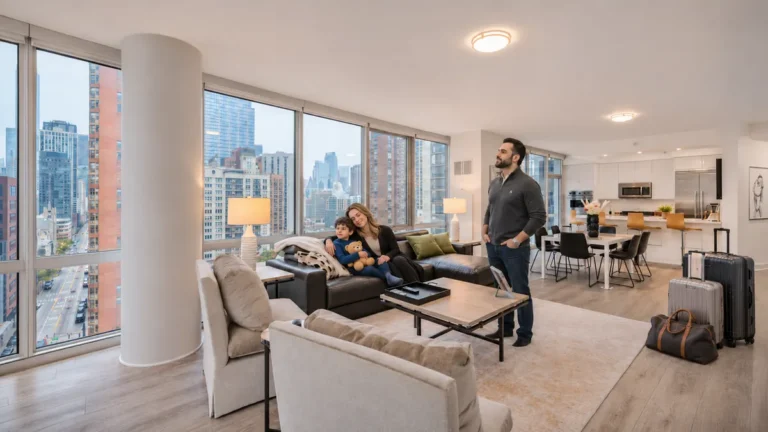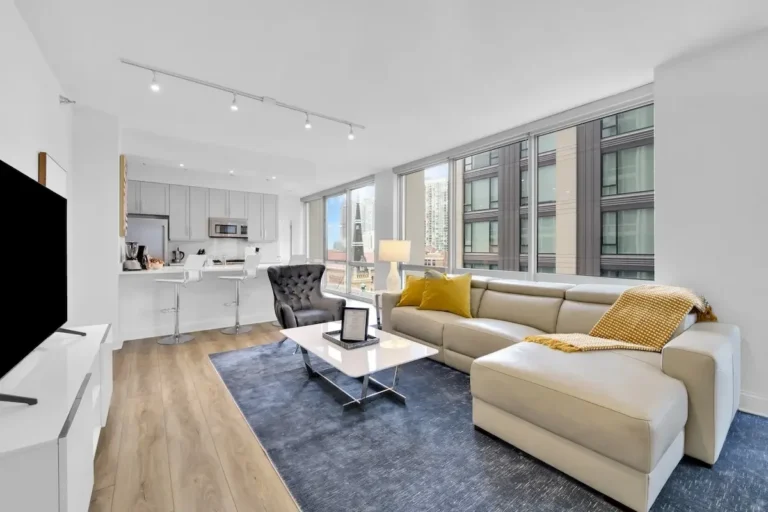



Short answer: if a frozen or burst pipe has made your Chicago home unlivable, your homeowners policy’s additional living expense (ALE, or “loss of use”) coverage may pay for somewhere to stay while repairs happen. For a family, a furnished apartment with a kitchen and washer/dryer is usually far easier to live in than a hotel for weeks or months. Ryan Corporate Housing places displaced households in fully furnished apartments in Chicago and can bill the insurance company directly.
Chicago cold snaps are hard on plumbing. A pipe that freezes and splits inside a wall can soak drywall, floors and ceilings before anyone notices. Once the water is off, the next question is almost always the same: where do we live while this gets fixed? This guide walks through it step by step.
Burst pipe temporary housing at a glance
- Who pays: often the insurance company, through ALE / loss-of-use coverage, up to your policy’s limits
- What to call first: a plumber and water-mitigation company, then your insurer to open a claim
- What to ask your adjuster: whether ALE applies, your limit, and whether they can pay a housing provider directly
- Typical stay: varies with drying, repairs and materials — stays can be extended as repairs run long
- Our minimum stay: 30 days
- Every apartment includes: full furnishings, a full kitchen with cookware and dinnerware, in-unit washer/dryer, utilities and Wi-Fi; garage parking available
- Families: layouts up to three bedrooms; pets accepted (dog restrictions apply)
- Billing: one all-inclusive daily rate, one consolidated invoice, billed directly to the insurer when approved
- How fast: usually within a day or two, when we have availability
Step 1: Stop the water and document everything
Shut off the main water valve, call a plumber, and if water reached walls or floors, call a water-mitigation company to start drying. Before anything is torn out, take photos and video of every affected room, and keep every receipt from the first night onward — hotel, meals, laundry, supplies. Your insurer will use those receipts to reimburse or approve additional living expenses.
Step 2: Open a claim and ask about additional living expenses
Call your insurance company as soon as you can. According to the Illinois Department of Insurance’s post-disaster claims guide, most homeowners policies pay the extra costs of living elsewhere while your home can’t be lived in after a covered loss — not all of your living costs, and only up to the policy’s limit. Burst-pipe water damage is often covered when it’s sudden and accidental, though insurers can deny claims if the home wasn’t reasonably maintained or heated (the NAIC explains how this works).
Questions worth asking your adjuster on the first call:
- Is ALE / loss of use included, and what is my limit (dollars and time)?
- Can you pay a housing provider directly, so I’m not fronting the cost?
- Do you work with a placement company, or can I choose my own provider?
- What paperwork do you need from the housing provider?
Step 3: Decide between a hotel and a furnished apartment
A hotel is fine for the first few nights. But water-damage repairs rarely take a few nights — walls have to dry, materials get ordered, and contractors get booked up during a cold snap. For a stay of a month or more, a furnished apartment usually works better:
- A real kitchen, so you’re not eating every meal out (which also keeps meal claims down)
- A washer and dryer in the unit — important when clothes and linens were wet
- Separate bedrooms, so kids keep bedtimes and adults can work
- One place for the whole stay, instead of hotel hopping when dates change
- Room for the dog, in buildings that accept pets
Step 4: Choose a location that keeps your routine
Stay close to what you can’t move: work, school, and your house, so you can meet contractors. Our apartments are in Chicago’s central neighborhoods — the Gold Coast, Streeterville and the Loop — near transit and the expressways. Families who need more space often choose Two West Delaware in the Gold Coast, with two- and three-bedroom layouts; Atwater Apartments in Streeterville offers studios through three bedrooms with a pool, fitness center and 24-hour door staff. You can see every building on our furnished properties page.
Step 5: Let the housing provider handle the paperwork
When an insurer pays directly, we provide a W-9, invoices, and our Agreement and Direct Payment/Endorsement Authorization. You authorize your insurer to pay us; we bill the insurer; you’re only responsible for anything the policy doesn’t cover. We also work with placement companies, including CRS Temporary Housing, Primus Temporary Housing and ALE Solutions, and with public adjusters. If you’re an adjuster or coordinator, our guide for insurance adjusters covers what we need from you.
Step 6: Plan for repairs that run long
Water damage has a way of uncovering more work. Ask your contractor for an honest timeline and check in with your adjuster before your ALE dates run out. With us, stays can be extended; we just ask for 30 days’ notice before you move out, so time it to your contractor’s finish date. If fire caused the damage instead, see our step-by-step guide for families displaced by fire or water damage.
Frequently asked questions
Does homeowners insurance pay for a place to stay after a burst pipe?
Often, yes. If the water damage is a covered loss and your home can’t be lived in, additional living expense (loss of use) coverage typically pays the extra cost of temporary housing, up to your policy’s limits. Confirm with your adjuster.
Can the insurance company pay the apartment directly?
Many insurers will. Ryan Corporate Housing bills insurance companies directly with one consolidated invoice once the insurer approves the stay.
How quickly can we move into a furnished apartment?
Usually within a day or two, if we have availability. Check-in is 4 PM or later.
What is the minimum stay?
30 days. Most water-damage repairs take at least that long, and stays can be extended as repairs run long.
Can we bring our dog?
Yes, we accept pets, with some dog restrictions. Tell us about your pet when you reach out and we’ll match you with a building that fits.
Do we need to bring anything?
Just clothes and personal items. Every apartment comes furnished with a full kitchen, cookware and dinnerware, in-unit washer/dryer, utilities and Wi-Fi.
Need a place to stay while your home is repaired?
We’ve helped Chicago families and insurers with displaced housing since 2012. Call us at (312) 373-0861, send us your details, or check current availability.
This article is general information, not legal or insurance advice. Your coverage depends on your policy — check with your insurer or agent, or contact the Illinois Department of Insurance with questions.